Some buildings have a soul. You feel it when you walk through the door—layers of history, stories of past lives, and an atmosphere that modern buildings just can’t replicate. That’s what draws me to historical properties. Each of my Airbnb homes in Carcassonne, Annecy, and London has its own rich past, and for me, restoring and preserving these places is more than just a business—it’s a passion.
Why I Chose to Host in Historical Properties
I’ve always been fascinated by old buildings. They are filled with details that tell a story—high ceilings, antique windows, or a layout that reveals how spaces have evolved over time. Unlike modern apartments, where everything is standardized, historical homes carry the marks of the people who lived in them before. Each of my properties is deeply connected to its location’s heritage, offering guests a way to experience the past while enjoying the comfort of a thoughtfully designed stay.
Carcassonne: A Home with a Hidden History
Carcassonne is famous for its medieval city, but my property tells a different kind of story. Built in the early 20th century, it was originally a maison de maître, a grand townhouse for a wealthy family. At that time, the entire building—including what is now my apartment—was a single family home, complete with an inner courtyard that has since been closed off.
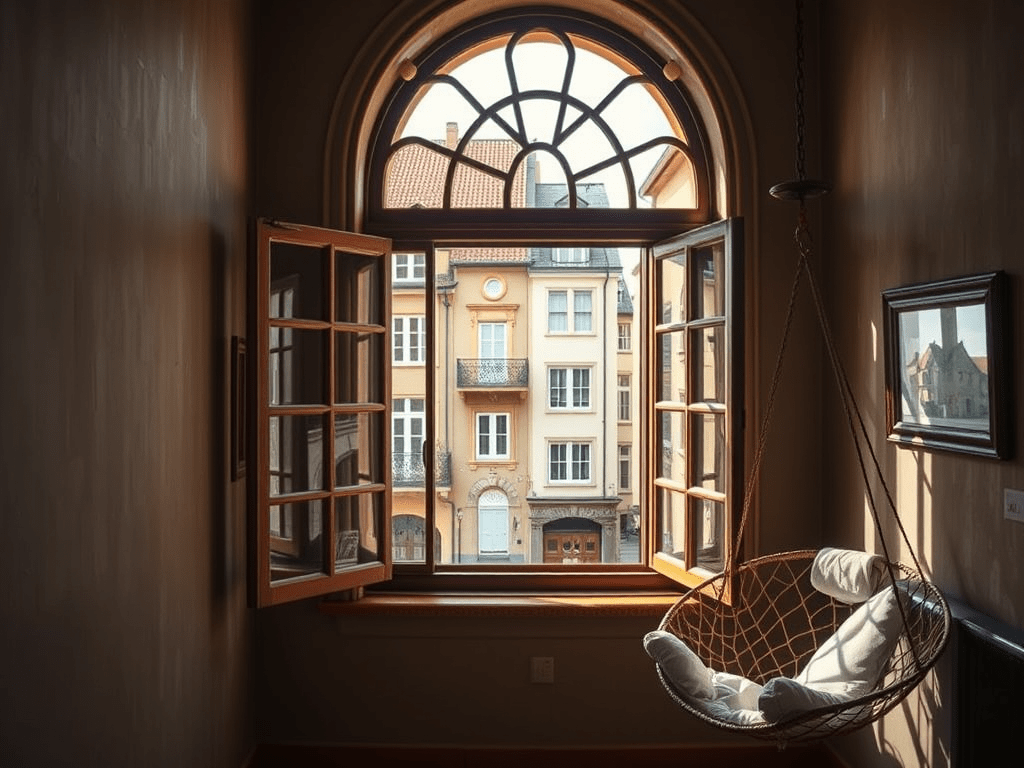
A well, now oddly situated inside the building, gives clues to its past. It once stood in an open courtyard, providing water to the entire household. Today, my property retains many of its historic features, from the high ceilings to the antique-style windows that I had carefully restored to match the original look—while improving insulation for modern comfort.
One of the quirkiest parts of the apartment is what is now a small patio with a hanging chair. This used to be part of a corridor that ran along the back of the entire building, connecting several homes. It had become an overgrown, forgotten space, but I decided to reclaim it and turn it into a cozy relaxation spot.
Owning a historical property is not always easy—renovations take time, and you have to respect the original architecture—but for me, it’s a labour of love.
Annecy: A Home on a Medieval Pathway
Annecy is a place of old-world charm, and my property is right at the heart of it, just on the path leading up to the medieval castle. The exact age of the building is unknown, but given its location, homes have likely stood there for hundreds of years. Though the current structure dates back to at least the late 19th century, I love imagining the many generations of people who have walked this same path.
Originally, my apartment was an attic space, unused and forgotten until it was converted into a living space in the 1970s or 80s. Today, it has a warm and cozy feel, perfect for a romantic getaway in the old town.
A fun little detail: the first Salomon ski workshop—yes, the famous brand—was just next door! It’s incredible to think that Annecy’s deep connection to alpine sports has roots right in my neighborhood.
London: Life in a Victorian Townhouse
My London property is a classic Victorian home, built in 1845, during one of the most exciting periods of British history. The Industrial Revolution was in full swing, and cities were expanding rapidly. These homes, built in elegant rows with intricate coving, high ceilings, and large sash windows, were designed to house the growing urban population.
When I first moved in, I assumed the property had once been a single grand home, but my research into the 1851 census told a different story. From the very beginning, it was a multi-occupancy building—at one point, 16 people lived within its walls, with entire families crammed into single 13sqm rooms. Most of the past residents were working-class Londoners, including tailors, cooks, and masons. I suspect many of them worked in the grand houses of St. George’s Square, just behind my property, which was home to wealthier Londoners.
Today, the building remains a protected conservation area, which means any renovations must respect its original Victorian design. When I replaced the windows, I had to ensure they matched the exact style of the originals—a detail that helps preserve the historical charm while offering modern comfort.
Bringing History to Life for Guests
For me, staying in a historical property isn’t just about sleeping in a beautiful space—it’s about experiencing the past in a meaningful way. That’s why I’ve added small, playful historical details to enhance the guest experience:
- In Carcassonne, I created AI-generated medieval-style portraits that blend the city’s history with a fun modern twist.
- In Annecy, a vintage-style telephone adds a nostalgic touch.
- In London, the original Victorian coving and high ceilings transport guests back to another era.
Staying in a historical home is different from a standard rental or hotel—it has character, authenticity, and a story to tell. My goal is to offer guests an experience that is both comfortable and culturally enriching.
Final Thoughts: A Sense of Escape and Home
I hope that when guests stay in my properties, they feel a mix of wonder and comfort—that feeling of stepping into a different time period while still enjoying the coziness of home. That’s the balance I strive for: an escape from everyday life, but with all the warmth and familiarity of a well-loved space.
And if I were to own another historical property in the future? Maybe a Haussmann-style apartment in Paris, or even a converted barn in the French countryside—because my love for historical homes isn’t going anywhere.
 City Escape Collection
Leave a comment