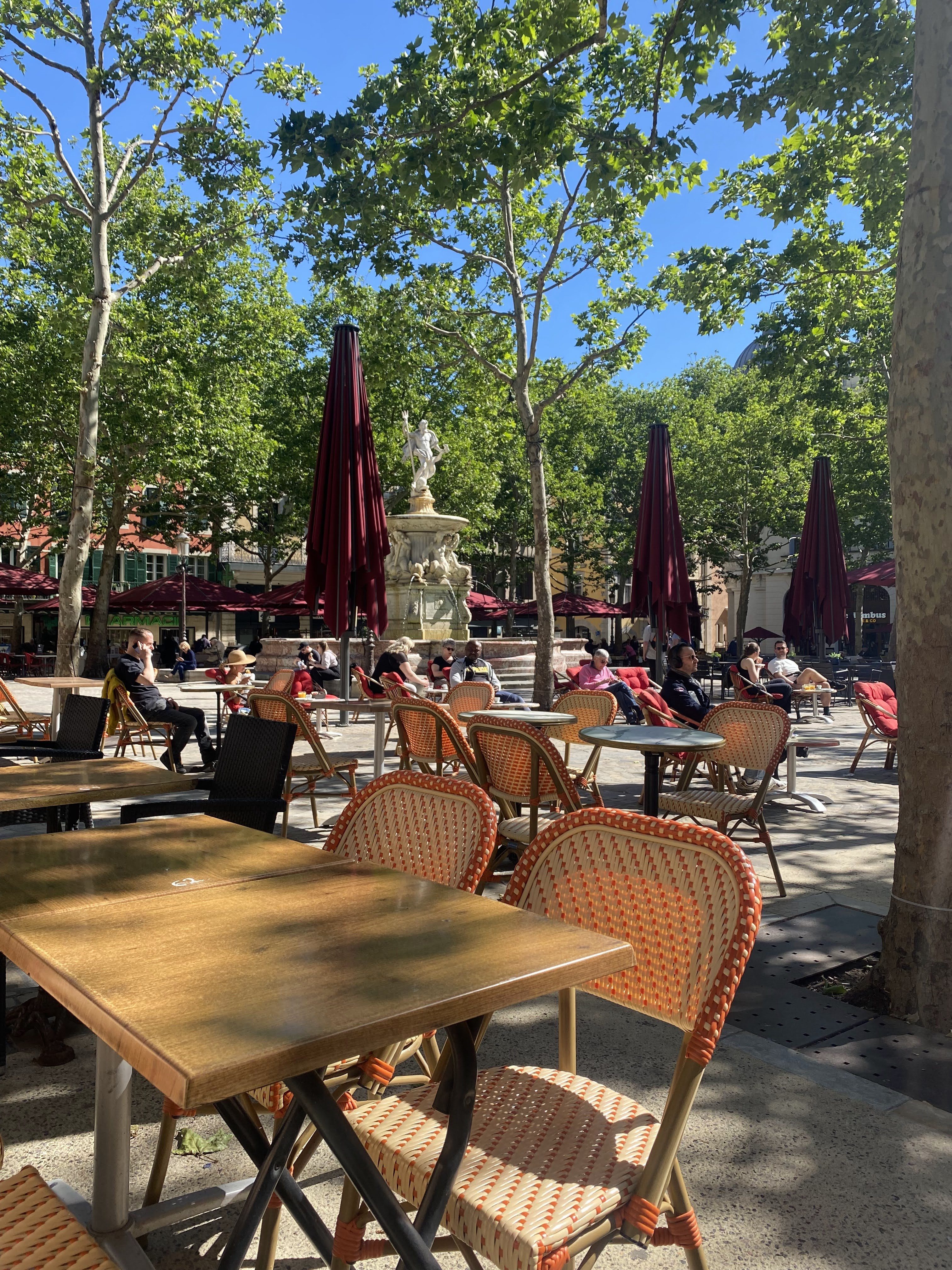
Carcassonne is easier to reach than its medieval, middle-of-nowhere appearance suggests. It has its own airport, sits on a main train line, and is a straightforward drive from several major cities. But the best way in depends entirely on where you’re coming from, and a couple of the options people assume exist actually don’t. Here’s the honest, practical guide to getting to Carcassonne.
By plane: closer than you’d think
Carcassonne has its own airport (CCF), about 5 km from the centre, served mainly by Ryanair with seasonal routes from the UK, Ireland and a handful of European cities. Routes change from year to year, so check current availability on Ryanair or Google Flights before building a trip around it. A taxi from the airport to the Bastide costs roughly 15 to 20 euros, and there’s a seasonal shuttle bus.
If Carcassonne’s own airport doesn’t serve your city, Toulouse-Blagnac is the practical alternative. It’s about 90 km away (an hour by car or a little over an hour by train with a change), and it’s a far bigger airport with connections across Europe. For most travellers flying from further afield, Toulouse then train or car is the realistic route in.
One thing to know: there are no direct flights to Carcassonne from Spain, despite how close it feels. If you’re coming from Barcelona, skip the plane and read the train and car sections below.
By train: the easy, city-centre option
The train is my favourite way to arrive, because Carcassonne’s station sits right in the heart of the Bastide Saint-Louis, a ten-minute walk from most accommodation. No car, no parking, no stress.
Carcassonne is on the main line between Toulouse and the Mediterranean coast. From Toulouse it’s about 50 minutes to an hour. From Paris, take the TGV to Toulouse (or Narbonne) and change, for a total of around 5 to 6 hours. From within France, the SNCF Connect website or app is where to book, and earlier booking means cheaper fares.
Coming from Barcelona, the train works but takes a change: a high-speed train to the French side of the border, then a connection through to Carcassonne, totalling roughly 6.5 hours depending on the schedule. It’s comfortable and drops you in the centre, though the drive is faster if you have a car.
By car: the flexible option, and how far it really is
Driving makes sense if you want to explore the region, the Cathar castles, the vineyards, the villages, which are scattered across the countryside and poorly served by public transport.
Rough driving distances and times, in normal traffic:
- From Toulouse: about 90 km, roughly 1 hour
- From Barcelona: about 315 km, roughly 3 hours via the AP-7/A-9 and the La Jonquera border
- From Montpellier: about 150 km, roughly 1.5 hours
- From Paris: about 780 km, a long day of 7 to 8 hours, better split with an overnight stop
One practical note for when you arrive: do not try to drive up into the medieval Cité. Access is very restricted and parking there is limited and expensive. If you’re staying in the Bastide Saint-Louis (the lower town, where I’d recommend basing yourself), parking is far simpler and cheaper, and the Cité is a walk across the bridge.
By bus: the budget option
Long-distance coaches such as FlixBus and BlaBlaBus serve Carcassonne, usually via Toulouse. From Barcelona, expect around 5 hours; from further afield, longer, often with a change. It’s the cheapest way in if you book ahead, sometimes under 20 euros, but it’s slow. Worth it for tight budgets, not for saving time.
Which should you choose?
A quick summary by starting point:
- From the UK or Ireland: fly to Carcassonne (CCF) directly if the route exists, otherwise fly to Toulouse and take the train or hire a car.
- From Barcelona: drive if you can (fastest and most flexible), or take the train. Not the plane, there are no direct flights.
- From Toulouse: train for simplicity, car if you want to explore the region.
- From Paris: TGV to Toulouse then connect, or drive with an overnight stop.
And a general rule: if you’re staying in Carcassonne itself and not planning day trips into the countryside, you don’t need a car at all. The train drops you in the centre, and the city is walkable. A car is only worth it if you intend to explore the wider region.
Where to stay when you arrive
However you get here, the Bastide Saint-Louis is the ideal base: the train station is right there, parking is easy if you’ve driven, and the medieval Cité is a short walk across the river. Restaurants, the Saturday market and the Canal du Midi are all on your doorstep.
I have apartments in the Bastide, with equipped kitchens, space for families and a flexible pet policy.
See my apartments in Carcassonne →
Any questions about getting to Carcassonne or planning your trip? Just write to me.
Leave a Reply