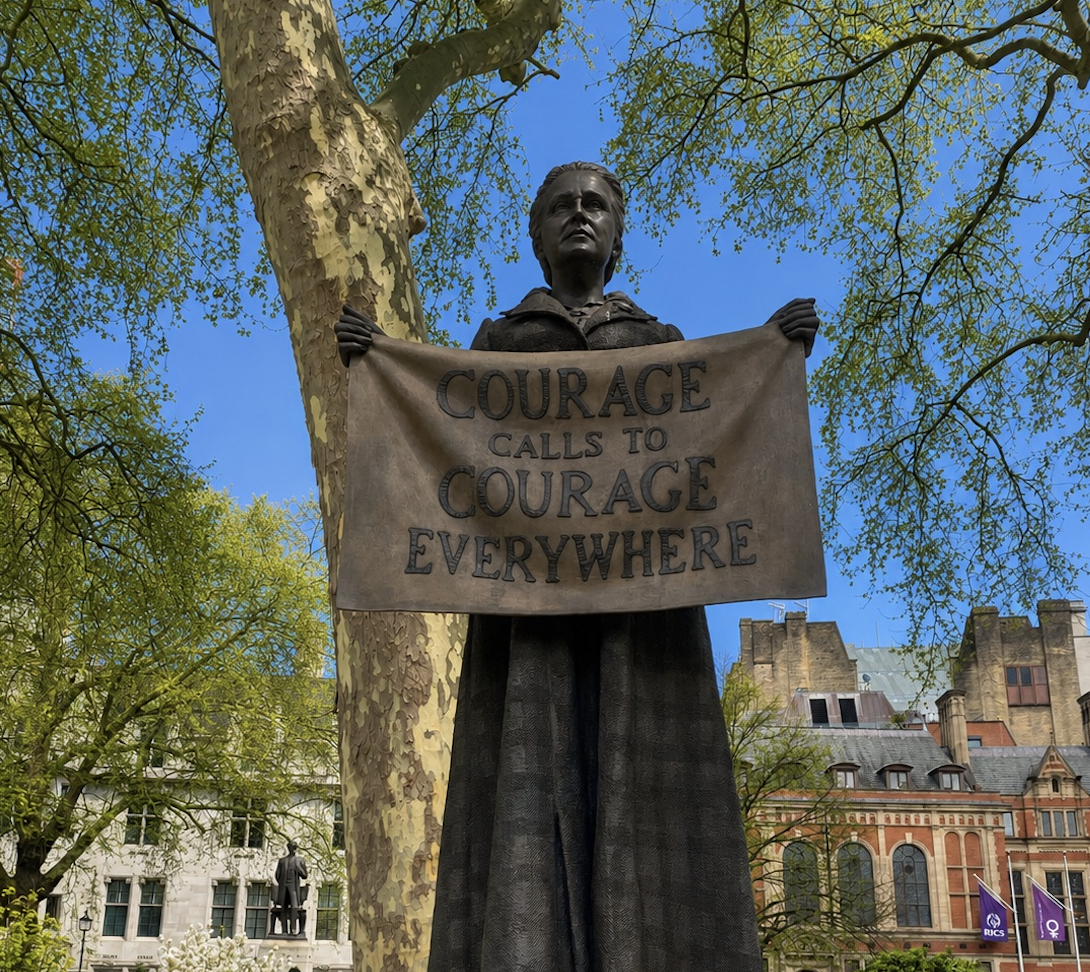
Westminster is one of the world’s great centres of political power, and for most of its history, women were almost entirely absent from it. Walk through Parliament Square today and among the bronze statues of Churchill, Lincoln, Gandhi and Mandela, you will find exactly one woman. Yet the story of how women fought their way into these corridors of power is one of London’s most compelling, and it is written into the streets themselves if you know where to look.
If you want to explore the feminist history of London, Westminster is where to begin. Here are two very different ways to do it, both of which I created myself: an audio walking tour for those who want the stories told in their ears, and a treasure hunt for those who would rather solve the history than be told it.
Why Westminster for women’s history
Westminster is the obvious and the perfect place to trace London’s feminist history, because this is where the battle actually happened. This is where the suffragettes chained themselves to railings, where Emmeline Pankhurst campaigned with the motto “deeds, not words,” where Nancy Astor became the first woman to take her seat in Parliament, and where Margaret Thatcher walked through the black door of 10 Downing Street as Britain’s first female Prime Minister.
The landmarks are all within walking distance of each other: Parliament Square, Victoria Tower Gardens, Westminster Abbey, Whitehall, Downing Street. In a single afternoon you can walk the entire arc of the story, from women who had no vote and no official power to women who ran the country.
Option one: the audio walking tour, history in your ears
If you like to absorb history as you walk, guided by a voice rather than a screen, the audio tour is for you. “Westminster’s Women: From Suffragette to Prime Minister” is a self-guided audio walk I produced for VoiceMap, and it uses GPS to play each story automatically as you reach the right spot, so you can keep your eyes on the streets rather than your phone.
It is a walk of about 2 km with 26 stops, and takes roughly an hour at an easy pace. It starts at Parliament Square and traces the stories of the women who fought, legislated and sacrificed their way into a system never designed to include them:
- Millicent Fawcett, the only woman among Parliament Square’s statues
- Emmeline Pankhurst, whose statue stands quietly beside the Thames in Victoria Tower Gardens, and who transformed campaigning with hunger strikes and brilliant visual branding
- Nancy Astor, the first woman to take a seat in Parliament
- Margaret Thatcher, and the contradictions of a woman who shattered the highest glass ceiling while remaining sceptical of feminism itself
The tour ends at the Women’s War Memorial on Whitehall, a bronze of empty uniforms honouring the women who kept the country running through two world wars. It asks as many questions as it answers, which is exactly how I wanted it.
The audio tour works offline once downloaded, you can pause and resume it whenever you like, and you keep it forever to replay.
Discover the audio tour on VoiceMap →
Option two: the treasure hunt, solve the history yourself
If you would rather explore actively, turning the district into a game, the treasure hunt is the one to choose. “Westminster: A Suffragette’s Hidden Secret” is a self-guided hunt I created, set in the same streets but told as a mystery.
London, 1912. Women cannot vote. Constance Wrey, a campaigner for women’s suffrage, has hidden something precious in the streets of Westminster, steps from Parliament, and left a trail of clues in the stones of the district of power. It is up to you to follow her trail and decode what she left behind.
It takes about 90 minutes at your own pace, is recommended from age 12, and works perfectly for couples, friends or groups. There is nothing to download: you receive a link and password by email, start whenever you like, and I am reachable by WhatsApp throughout if you get stuck. It is available in both English and French.
Where the audio tour tells you the history, the hunt makes you work for it, decoding clues and looking at the district with completely different eyes. Both visit the same powerful streets; they simply suit different moods.
Which should you choose?
Choose the audio tour if you want to learn, to be told the stories richly and thoughtfully as you stroll, hands-free, at a gentle pace. It is ideal for solo explorers, history lovers, and anyone who enjoys a really well-told walk.
Choose the treasure hunt if you want to play, to solve puzzles, to explore with a bit of challenge and friendly competition. It is ideal for couples, groups of friends, and families with older children.
And there is nothing to stop you doing both, on different days, for two completely different experiences of the same remarkable district.
A perfect way to mark International Women’s Day
If you are looking for something meaningful to do around International Women’s Day in March, or simply want to see London through a different lens, walking in the footsteps of Westminster’s women is as good as it gets. These are not abstract historical figures. They walked these exact streets, fought outside this exact Parliament, and changed the country from these precise spots. Standing where they stood, whether guided by a voice or by a trail of clues, makes their story feel close in a way no museum quite manages.
Have questions about either the audio tour or the treasure hunt? Just write to me, I would love to help you plan your visit.
Leave a Reply